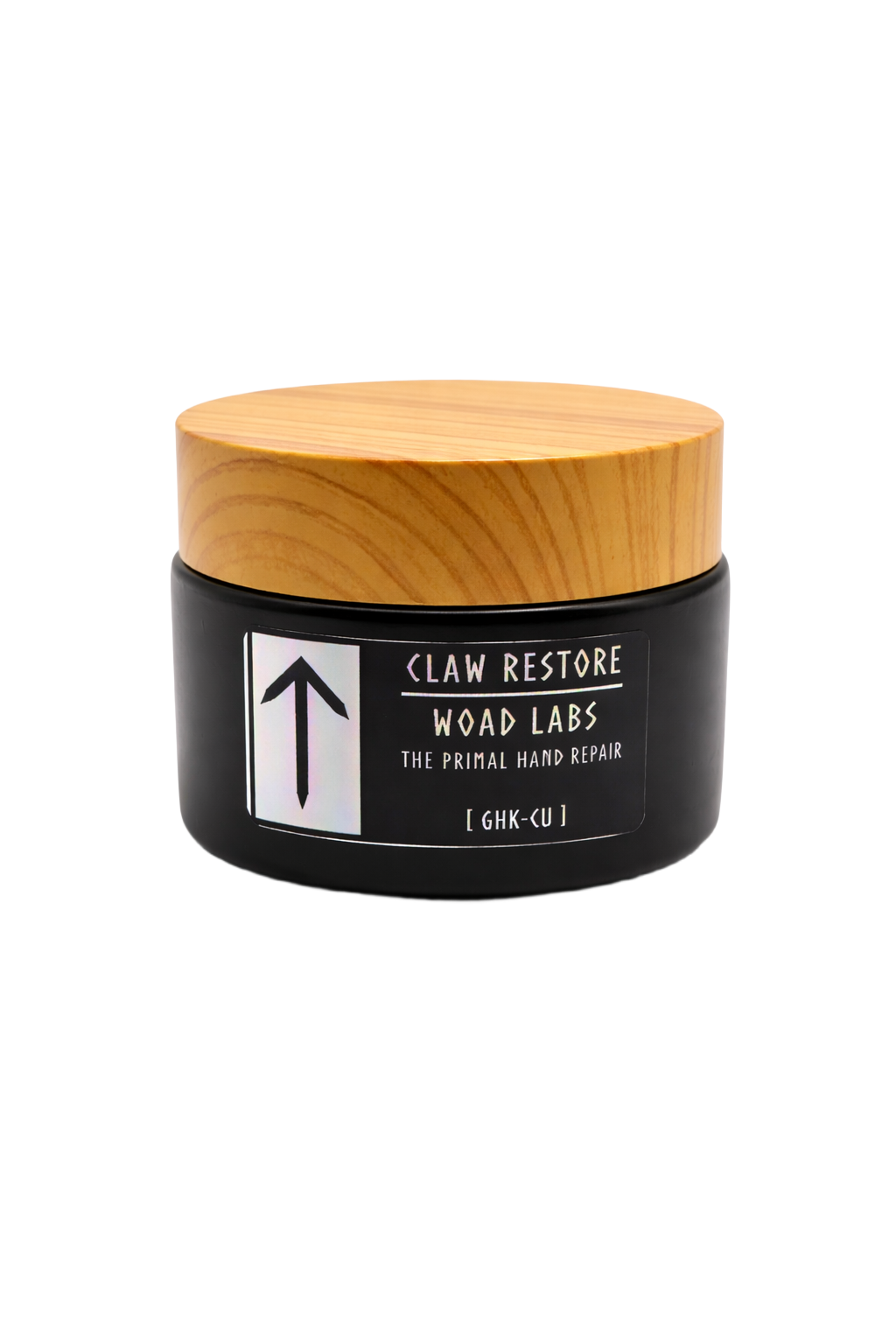
Anti-Ageing for Hands: Repairing Hard-Working Skin
Hands age faster than almost anywhere — thin skin, no oil, constant washing. Here's how to protect and repair them properly.
Hands do the work — the cold, the washing, the constant handling — and they're often the first place to give away someone's age, because they're the last place anyone thinks to look after. They deserve the same care as your face, and the good news is the same ingredients work brilliantly on them.
Why hands age fast
The skin on the back of your hands has very little fat under it and almost no oil glands of its own. So when it's hit by cold, wind or repeated washing, moisture doesn't just evaporate — the barrier itself breaks down. That's what leaves hands with thin, crepey texture and dark age spots far sooner than the face.
Shield them with Ectoin
Ectoin is the standout protector here. It binds water into a hydrated shell around your skin cells — effectively an invisible glove that stays put even after you wash your hands, keeping cold and wind from reaching the fragile skin beneath. It's the difference between hands that chap every winter and hands that hold up.
Repair with copper peptides
To undo damage that's already there, you want GHK-Cu. This copper peptide signals thin hand skin to thicken and build new collagen, and it helps fade age spots by regulating how the skin produces pigment. It also heals the small cracks and micro-tears that come from manual work.
A simple routine
Use Northern Reach or Claw Restore — both combine the Ectoin shield and copper peptide repair. Smooth a little onto the backs of your hands after every wash, and use a thicker layer before bed as an overnight treatment while your hands are still. Do it consistently and your hands keep their strength and smoothness whatever the weather throws at them.


