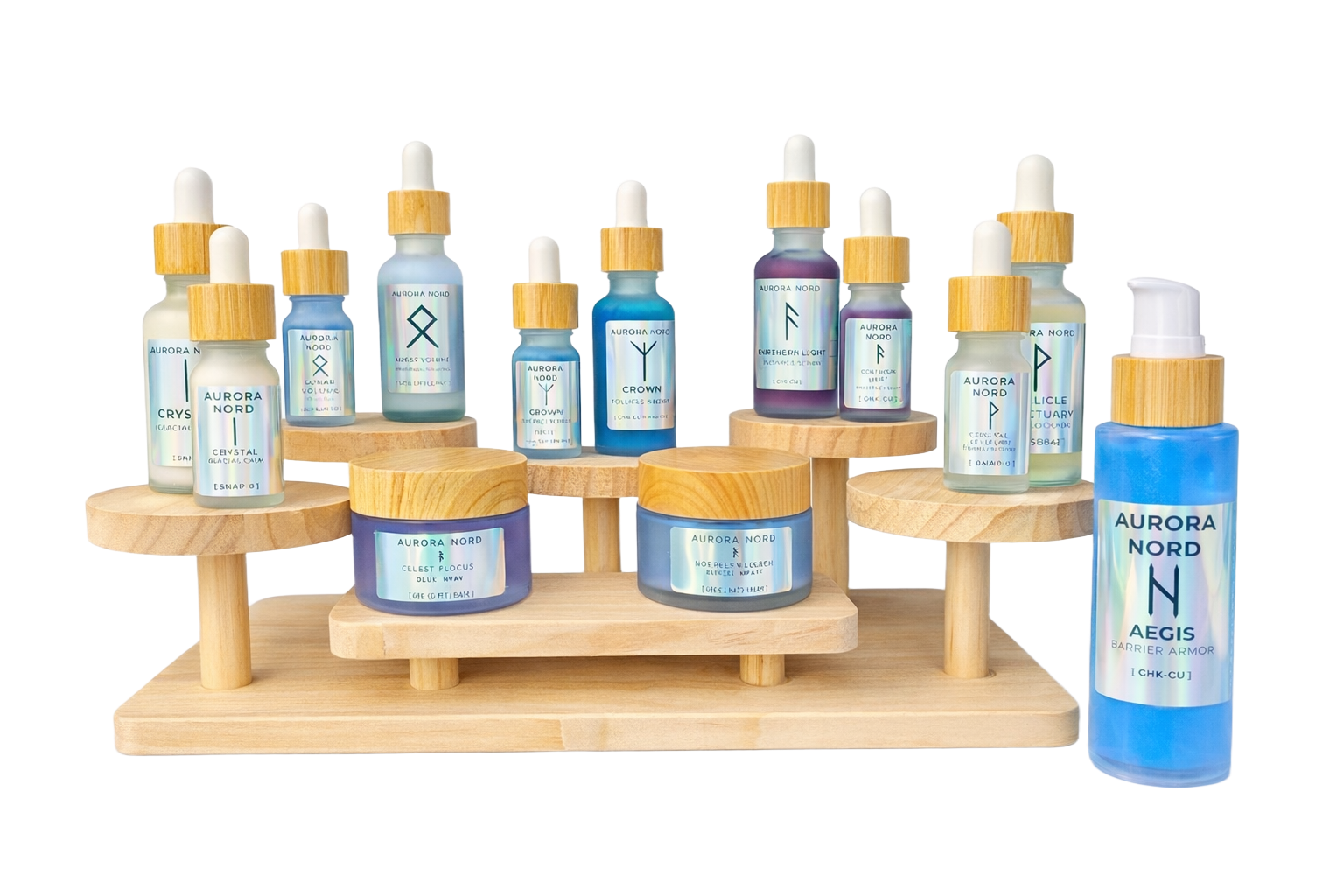
Why Our Serums Are Water-Based, Not Silicone
Our serums feel light and watery on purpose. Here's why heavy silicones and oils actually get in the way of peptides doing their job.
Pick up one of our serums and the first thing you'll notice is how light it feels — watery, even, compared with the rich creams you might be used to. That's not us cutting corners. It's a deliberate choice, and it's about making sure the active ingredients actually reach your skin.
The problem with silicone and oil
A lot of premium products lean on silicones and heavy oils because they feel luxurious and glide on smoothly. The catch is that peptides are water-soluble signalling molecules — to work, they have to travel down into the skin. Suspend them in a thick, occlusive layer of silicone and they get stuck on the surface, then washed away without ever getting where they're needed. The product feels lovely and does very little.
Why water works better
By keeping our serums water-based, we keep the peptides stable and free to move. Water is the ideal carrier — it lets the actives flow into the skin rather than sitting on top of it. Where we need extra help getting them through the barrier, we use a small amount of a purified penetration enhancer rather than piling on heavy oils.
When we do use oils
There's a time and place: our heavy repair artifacts, like Aegis and Northern Reach, use ceramides and richer textures because the job there is to seal a broken barrier. Even then, we formulate carefully so the peptides are still delivered properly and nothing clogs.
What that means for you
If our serums feel thinner than what you're used to, that's the point. It's the feel of an active being delivered without decorative filler getting in the way — substance over slip.


